 |  |  |  |
|---|---|---|---|
 |  |
Botanical Garden – Chisinau Municipality

Strada Dumbrava Roşie nr. 7

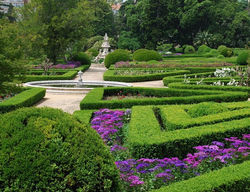
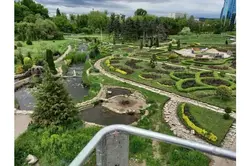
The Iași Botanical Garden (GBI) is one of the largest botanical parks in Romania, located in the northeast of the country. The park covers an area of 20 hectares and includes over 4,000 plant species and over 200 animal species. GBI is part of Romania's cultural and natural heritage. It was established in 1856, being the first Botanical Garden in the country, and hosts approximately 2,000 taxa of herbaceous and woody plants. The botanical garden's collections include 9,876 plant taxa from different regions.
It is the first Romanian university botanical garden and, at the same time, the largest in the country, unique for the large number of plant species and the special conservation measures applied
In Iași, in 1856, the first Botanical Garden in Romania was established by the doctor and naturalist Anastasie Fătu. Located on a plot of land purchased with its own funds, near Râpa Galbenă, it would be for many years, until the death of the great scholar, an important cultural center for the studious youth of Iași, who had the opportunity to study botany on living material, but also a means of instruction and education for all nature lovers.
Stimulated by the interest shown in A.Fătu's garden, the Society of Physicians and Naturalists of Iași established, in 1873, a second Botanical Garden around the headquarters of this society, currently the Natural History Museum. The task of organizing this new garden was entrusted to Dr. Dimitrie Brândza, and the necessary funds were provided by the society. In 1870, the management of the University of Iași discussed the issue of establishing its own botanical garden on the land behind the old building of the University where the buildings of the Institute of Medicine and Pharmacy are currently located. To meet the demands of biological education, in 1921, Prof. Al. Popovici established a new botanical garden on the land behind the new University building with an area of approximately 1 hectare, on which a small greenhouse complex for tropical plants was built.
This garden served the botanical education of Iasi for over 40 years, until 1963, when the land was chosen as the location for a new botanical garden in Dealul Copoului on Str. Dumbrava Roșie, under the supervision of Professor Emilian Țopa. A technical and economic study was developed and in the following years the takeover of the land, the organization of the network of roads and alleys, the plantations, the construction and population of the greenhouses began, at first with materials from the old botanical garden.
In 1973, the institution's directorate was taken over, unpaid, by the botanist from Iași Mandache Leocov: "They told me they needed me for a year, a year and a half. I was in love with plants, I had done my doctorate in agricultural botany. One year turned into 17 years. The garden was 43 hectares at the time, I left it with 105 hectares. With the exception of an area of six hectares, all the land I took over was unproductive, arid. The vast majority was so degraded that the Gostat abandoned them. I did the fencing, the expansion of the water network, the roads, I filled the ravines, I made the lakes, the household centers. [...] For about four years I organized the greenhouses of the botanical garden. Some of the tropical tree greenhouses are also from my time. I also started the chrysanthemum exhibition," Leocov recalls. In 1988, it published, with the addition of works by Emilian Țopa, Ion Sârbu, Ionel Lupu, Rodica Rugină and Corneliu Tăbăcaru, the reference work Ghidul Grădinii Botanice, at the same time broadening the sphere of relations of the university institution with other botanical gardens in the world.
The initially taken over land areas were gradually added to others, reaching today 80 hectares.
Since 2000, the Botanical Garden of Iași has been a founding member of the Association of Botanical Gardens of Romania.
The systematic section has an area of 5 hectares, on which approximately 2000 plant species are cultivated, arranged in branches, orders and families, according to natural relationships. The Systematic Sector is addressed especially to pupils and students, who thus have a living biological material, with the help of which they can better understand the unity and diversity of the living world.
The greenhouse complex consists of 12 greenhouses, each dealing with a certain aspect of the world's flora and vegetation: Mediterranean, tropical, subtropical plants (cactus collections), ornamental flowers (36 varieties of azaleas and 469 varieties of chrysanthemums).
The exhibitions organized in the greenhouses in February (azaleas) and October (chrysanthemums) attract a large number of visitors and are famous nationwide.